


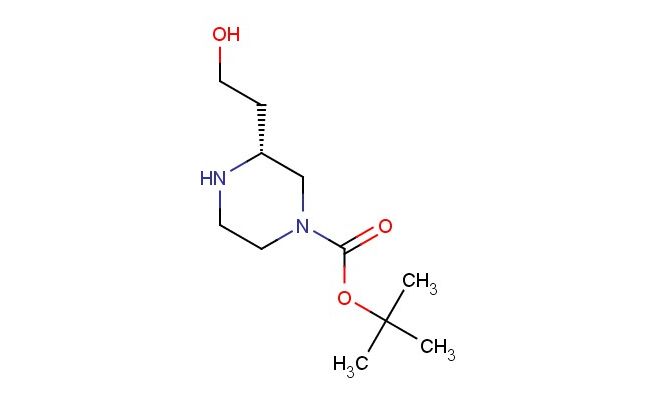


(R)-tert-butyl 3-(2-Hydroxyethyl)piperazine-1-carboxylate
$315.00
CAS No.: 1272421-10-9
Catalog No.: 192774
Purity: 95%
MF: C11H22N2O3
MW: 230.308
Storage: 2-8 degree Celsius
SMILES: OCC[C@@H]1CN(CCN1)C(=O)OC(C)(C)C
Catalog No.: 192774
Purity: 95%
MF: C11H22N2O3
MW: 230.308
Storage: 2-8 degree Celsius
SMILES: OCC[C@@H]1CN(CCN1)C(=O)OC(C)(C)C
For R&D use only. Not for human or veterinary use.
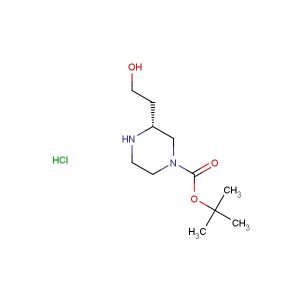
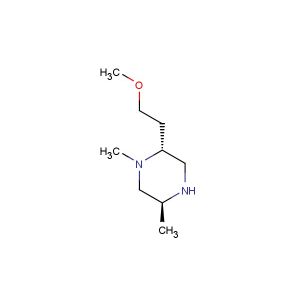
![2-[(2S)-1-benzylazetidin-2-yl]ethan-1-ol](https://www.chemshuttle.com/media/catalog/product/cache/eda3e020a548044183bce7a8a96486f8/1/6/166919_1.jpg)
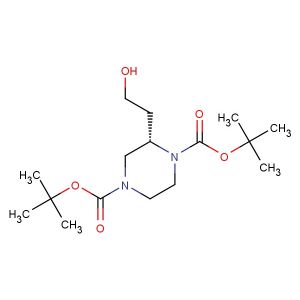

(R)-tert-butyl 3-(2-Hydroxyethyl)piperazine-1-carboxylate; CAS No.: 1272421-10-9; (R)-tert-butyl 3-(2-Hydroxyethyl)piperazine-1-carboxylate. PROPERTIES: This hydroxyethyl-substituted piperazine carbamate has molecular formula C12H23N3O3. It generally appears as a white crystalline powder. The (R)-tert-butyl 3-(2-Hydroxyethyl)piperazine-1-carboxylate demonstrates limited water solubility but good solubility in common organic solvents like methanol and ethyl acetate. Its melting point ranges between 85-90 C, and it has a molecular weight of approximately 257.33 g/mol. When handling, care should be taken to avoid skin contact and use of proper respiratory protection. Storage should be in a tightly sealed container at room temperature, protected from light and moisture. The compound is sensitive to strong acids and may undergo carbamate hydrolysis upon exposure to aqueous conditions. In case of spillage, absorb with inert material and dispose of in accordance with local regulations. APPLICATIONS: The (R)-tert-butyl 3-(2-Hydroxyethyl)piperazine-1-carboxylate serves as a valuable intermediate in the synthesis of serotonin receptor antagonists for psychiatric disorders where the piperazine ring provides essential hydrogen bonding interactions with receptor subtypes (as detailed in medicinal chemistry literature). The hydroxyethyl group forms additional hydrogen bonds with receptor residues. Additionally, the compound functions as a building block in the preparation of chiral ligands for asymmetric catalysis, achieving enantiomeric excesses above 95% in certain hydrogenation reactions as described in synthetic chemistry journals. The carbamate group can be further functionalized through hydrolysis or alkylation reactions to produce various derivatives for chemical research applications.
Reviews
Write Your Own Review