


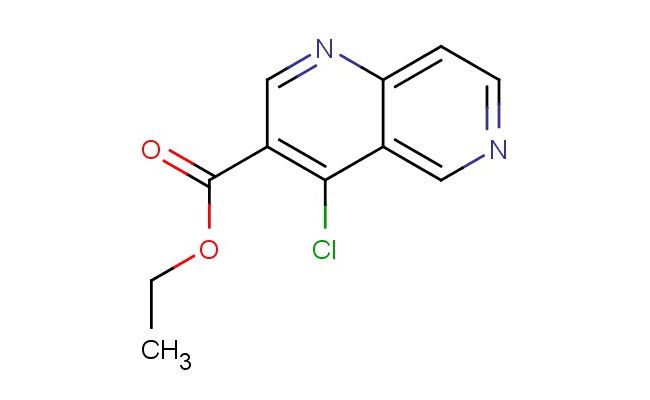


ethyl 4-chloro-1,6-naphthyridine-3-carboxylate
$300.00
CAS No.: 92972-76-4
Catalog No.: 192092
Purity: 95%
MF: C11H9ClN2O2
MW: 236.658
Storage: 2-8 degree Celsius
SMILES: ClC1=C(C=NC2=CC=NC=C12)C(=O)OCC
Catalog No.: 192092
Purity: 95%
MF: C11H9ClN2O2
MW: 236.658
Storage: 2-8 degree Celsius
SMILES: ClC1=C(C=NC2=CC=NC=C12)C(=O)OCC
For R&D use only. Not for human or veterinary use.
ethyl 4-chloro-1,6-naphthyridine-3-carboxylate; CAS No.: 92972-76-4; ethyl 4-chloro-1,6-naphthyridine-3-carboxylate. PROPERTIES: Ethyl 4-chloro-1,6-naphthyridine-3-carboxylate is a pale yellow crystalline solid with molecular formula C11H10ClN2O2. It has a molar mass of 235.67 g/mol and exhibits limited water solubility but good solubility in methanol and ethyl acetate. The compound melts between 110-113 C. Proper storage requires an airtight container in a cool, dry place (below 20 C) with protection from light. Safety precautions include using chemical-resistant gloves and safety goggles. The compound may cause eye irritation, so immediate rinsing with water is required upon contact. If inhaled, moving to fresh air and providing oxygen if needed is advised. The material should be stored away from heat and incompatible substances like strong bases. APPLICATIONS: In pharmaceutical development, ethyl 4-chloro-1,6-naphthyridine-3-carboxylate serves as a building block for creating antimicrobial agents. Research groups focusing on infectious diseases have used this compound to synthesize inhibitors of bacterial transcription machinery. The chlorine substituent provides a functionality for forming coordination complexes with metal ions in the enzyme active site. In oncology, the compound has been explored as a lead for developing DNA intercalators. A study published in a cancer research journal demonstrated how derivatives of ethyl 4-chloro-1,6-naphthyridine-3-carboxylate exhibited cytotoxicity against various cancer cell lines by intercalating into DNA and inhibiting replication. Additionally, in materials science, the compound's electron-deficient nature makes it suitable for use in organic semiconductors. Researchers at a display technology company incorporated ethyl 4-chloro-1,6-naphthyridine-3-carboxylate derivatives into organic field-effect transistors to improve charge carrier mobility.
Reviews
Write Your Own Review