



![5-(trifluoromethyl)-1H-pyrazolo[3,4-c]pyridine](https://www.chemshuttle.com/media/catalog/product/cache/31dbf0bffbfa69a5826a72cec9a446de/1/9/191958_2.jpg)

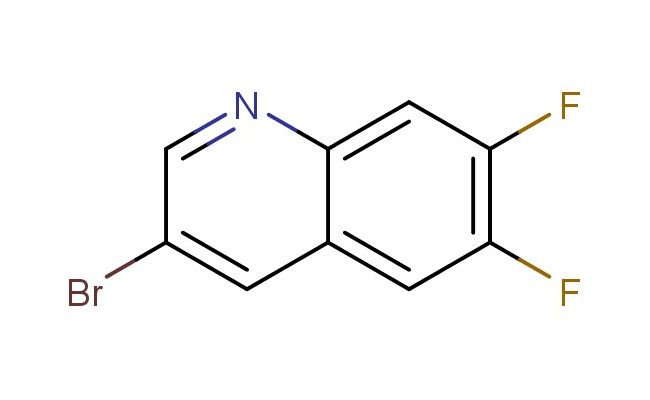
3-bromo-6,7-difluoroquinoline
$325.00
CAS No.: 1841081-70-6
Catalog No.: 191959
Purity: 95%
MF: C9H4BrF2N
MW: 244.038
Storage: 2-8 degree Celsius
SMILES: BrC=1C=NC2=CC(=C(C=C2C1)F)F
Catalog No.: 191959
Purity: 95%
MF: C9H4BrF2N
MW: 244.038
Storage: 2-8 degree Celsius
SMILES: BrC=1C=NC2=CC(=C(C=C2C1)F)F
For R&D use only. Not for human or veterinary use.
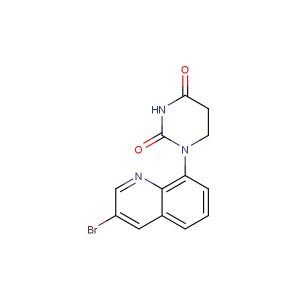
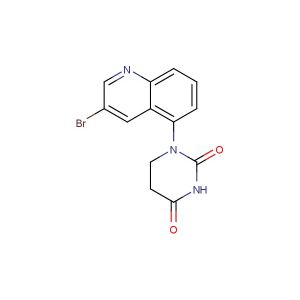
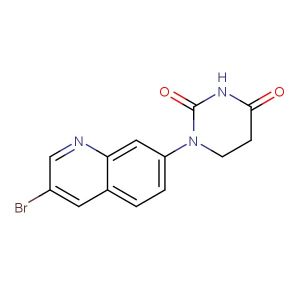
3-bromo-6,7-difluoroquinoline; CAS No.: 1841081-70-6; 3-bromo-6,7-difluoroquinoline. PROPERTIES: 3-bromo-6,7-difluoroquinoline (CAS No.: 1841081-70-6) appears as a pale yellow crystalline solid with a melting point between 105-108 C. The compound features a bromine atom at position 3 and fluorine atoms at positions 6 and 7 of the quinoline ring system. These substituents impart significant electron-withdrawing effects and lipophilicity to the molecule. Solubility characteristics reveal moderate dissolvability in polar organic solvents like methanol and DMSO, while being sparingly soluble in water due to the hydrophobic aromatic system. The substance is moisture-sensitive and prone to hydrolysis under basic conditions, necessitating storage in a tightly sealed container under nitrogen atmosphere at controlled room temperature (15-25 C). Safety precautions include using P295 respiratory protection, nitrile gloves, and safety goggles due to potential skin irritation and eye damage. The compound has a moderate vapor pressure and forms flammable mixtures with air above 40 C. APPLICATIONS: 3-bromo-6,7-difluoroquinoline functions as a critical intermediate in developing antibacterial agents with broad-spectrum activity as documented in antimicrobial research. Its brominated and fluorinated quinoline core enables the synthesis of antimalarial agents through its ability to form coordination complexes with metal ions as reported in medicinal inorganic chemistry literature. Additionally, 1841081-70-6 serves as a building block for fluorescent probes used in detecting specific nucleic acid sequences, with several studies highlighting its utility in creating molecular beacons for genetic diagnostics. The compound also contributes to the development of agrochemical intermediates for herbicides with novel mechanisms of action, as described in agricultural chemistry literature.
Reviews
Write Your Own Review