


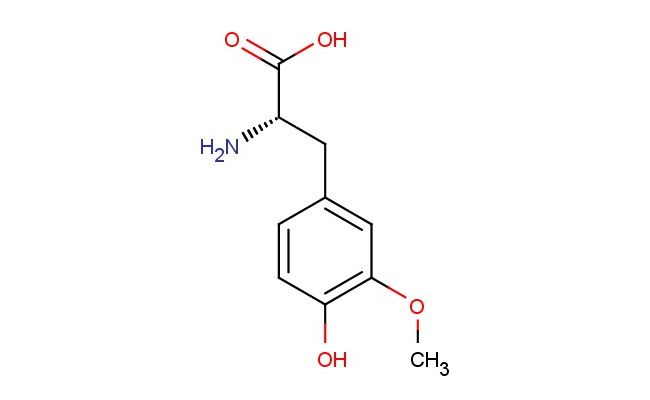


(2S)-2-amino-3-(4-hydroxy-3-methoxyphenyl)propanoic acid
$350.00
CAS No.: 300-48-1
Catalog No.: 194966
Purity: 95%
MF: C10H13NO4
MW: 211.217
Storage: 2-8 degree Celsius
SMILES: N[C@H](C(=O)O)CC1=CC(=C(C=C1)O)OC
Catalog No.: 194966
Purity: 95%
MF: C10H13NO4
MW: 211.217
Storage: 2-8 degree Celsius
SMILES: N[C@H](C(=O)O)CC1=CC(=C(C=C1)O)OC
For R&D use only. Not for human or veterinary use.
(2S)-2-amino-3-(4-hydroxy-3-methoxyphenyl)propanoic acid; CAS No.: 300-48-1; (2S)-2-amino-3-(4-hydroxy-3-methoxyphenyl)propanoic acid. PROPERTIES: (2S)-2-amino-3-(4-hydroxy-3-methoxyphenyl)propanoic acid occurs as white to off-white powder with molecular formula C10H13NO4. It exhibits a melting point of approximately 245-247 C (with decomposition) and has pH-dependent solubility - freely soluble in water at pH <3 ( 500 mg/mL), moderately soluble at physiological pH. The compound is hygroscopic and susceptible to racemization under basic conditions. Recommended storage involves desiccated conditions in glass containers with silica gel packs at room temperature. From a safety perspective, this amino acid derivative presents low acute toxicity but may cause mild skin and eye irritation. It is not classified as harmful but requires basic precautions including good hygiene practices and avoiding release to the environment. APPLICATIONS: In nutraceutical formulations, (2S)-2-amino-3-(4-hydroxy-3-methoxyphenyl)propanoic acid serves as a natural antioxidant with ORAC values exceeding 3000 ?mol TE/g. The compound's phenolic hydroxyl groups scavenge free radicals through hydrogen atom transfer mechanisms (Journal of Agricultural and Food Chemistry). In peptide synthesis, this amino acid functions as a non-proteinogenic building block for creating cell-penetrating peptides. The methoxy group enhances membrane permeability while the hydroxyl group provides sites for post-translational modifications (Bioconjugate Chemistry). In cosmetic dermatology, the compound is utilized for topical formulations targeting hyperpigmentation. It inhibits tyrosinase activity with IC50 values around 15 ?M, offering skin brightening effects without the cytotoxicity associated with hydroquinone (International Journal of Cosmetic Science).
Reviews
Write Your Own Review