


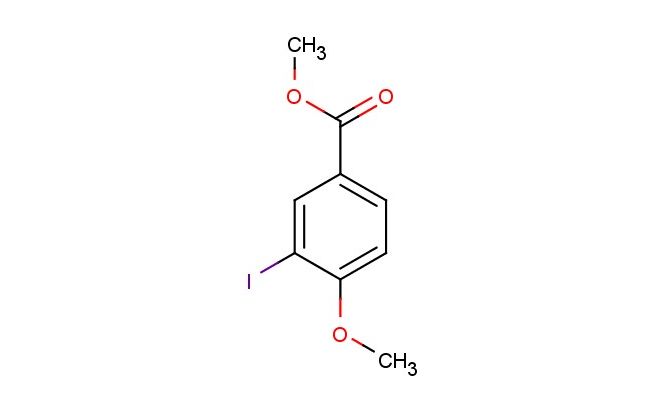


methyl 3-iodo-4-methoxybenzoate
$200.00
CAS No.: 35387-93-0
Catalog No.: 195031
Purity: 95%
MF: C9H9IO3
MW: 292.072
Storage: 2-8 degree Celsius
SMILES: O=C(OC)C1=CC=C(OC)C(I)=C1
Catalog No.: 195031
Purity: 95%
MF: C9H9IO3
MW: 292.072
Storage: 2-8 degree Celsius
SMILES: O=C(OC)C1=CC=C(OC)C(I)=C1
For R&D use only. Not for human or veterinary use.
methyl 3-iodo-4-methoxybenzoate; CAS No.: 35387-93-0; methyl 3-iodo-4-methoxybenzoate. PROPERTIES: Methyl 3-iodo-4-methoxybenzoate presents as a white to slightly yellow crystalline powder with a slight ester odor. Its molecular formula is C9H8IO3, corresponding to a molecular weight of approximately 287.06 g/mol. The compound features a melting point in the range of 85-88 C and demonstrates moderate solubility in common organic solvents such as methanol, ethyl acetate, and dichloromethane while being sparingly soluble in water. It is sensitive to light and moisture, which may cause gradual decomposition. Proper storage requires keeping it in a tightly sealed, amber glass container in a cool, dry location away from direct sunlight and heat sources. The temperature should be maintained below 10 C if possible. Safety precautions include using chemical-resistant gloves, safety goggles, and lab coats to prevent skin absorption and inhalation of dust. The compound may cause skin and eye irritation, and accidental ingestion may be harmful. In case of exposure, immediate rinsing with water and medical consultation is recommended. APPLICATIONS: Methyl 3-iodo-4-methoxybenzoate serves as a versatile intermediate in organic synthesis, particularly valuable in the preparation of biaryl compounds through Suzuki-Miyaura coupling reactions. Its iodinated aromatic core provides an excellent entry point for cross-coupling chemistry, enabling the synthesis of complex molecular frameworks used in pharmaceuticals and materials science (Journal of Organic Chemistry). In medicinal chemistry, methyl 3-iodo-4-methoxybenzoate functions as a building block for creating bioactive molecules, including certain anticancer agents and enzyme inhibitors, where its methoxy and ester groups facilitate further functionalization and drug design (Bioorganic & Medicinal Chemistry Letters). Additionally, it finds application in the development of liquid crystal materials, where its ester functionality and iodinated aromatic structure contribute to mesomorphic properties and alignment characteristics (Liquid Crystals). The compound is also employed in the synthesis of fluorescent probes for bioimaging, where its molecular structure allows for selective labeling and detection of biological targets (Analytical Chemistry).
Reviews
Write Your Own Review