


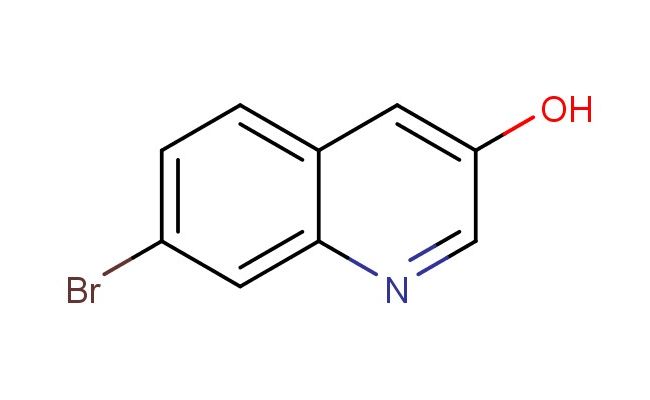


7-bromoquinolin-3-ol
$392.00
CAS No.: 1261487-70-0
Catalog No.: 192031
Purity: 95%
MF: C9H6BrNO
MW: 224.057
Storage: 2-8 degree Celsius
SMILES: BrC1=CC=C2C=C(C=NC2=C1)O
Catalog No.: 192031
Purity: 95%
MF: C9H6BrNO
MW: 224.057
Storage: 2-8 degree Celsius
SMILES: BrC1=CC=C2C=C(C=NC2=C1)O
For R&D use only. Not for human or veterinary use.
![2-bromo-9H-pyrrolo[2,3-b:4,5-c']dipyridine](https://www.chemshuttle.com/media/catalog/product/cache/eda3e020a548044183bce7a8a96486f8/1/8/187654_3.jpg)
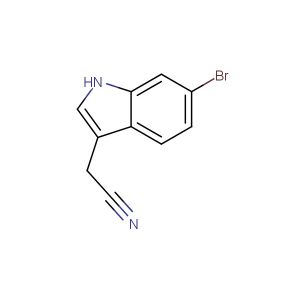
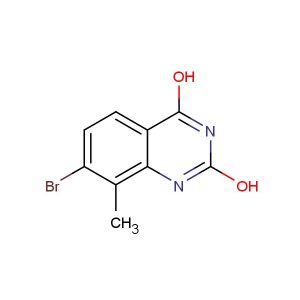
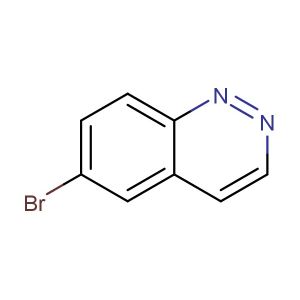
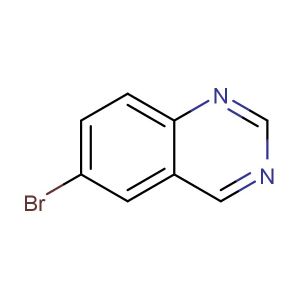
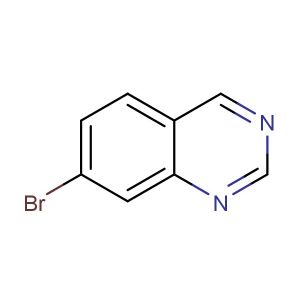
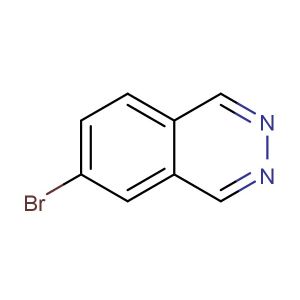
7-bromoquinolin-3-ol; CAS No.: 1261487-70-0; 7-bromoquinolin-3-ol. PROPERTIES: 7-bromoquinolin-3-ol is a crystalline solid with molecular formula C9H6BrNO. It has a molar mass of 244.06 g/mol and typically appears as off-white needles. The compound has limited water solubility but dissolves readily in organic solvents like ethanol and acetone. Its melting point is reported between 132-135 C. Storage should be in airtight containers at temperatures below 15 C, preferably under nitrogen atmosphere to prevent oxidation. Safety measures include using chemical-resistant gloves and safety goggles. The compound is sensitive to light, so exposure to UV radiation should be minimized. In case of skin contact, thorough washing with soap and water is recommended. If inhaled, moving to fresh air and seeking medical attention if respiratory symptoms develop is advised. APPLICATIONS: In medicinal chemistry, 7-bromoquinolin-3-ol is valued as a building block for antimalarial drug discovery. Research groups at tropical disease institutes have used this compound to synthesize quinoline-based antimalarials targeting Plasmodium falciparum. The bromine substituent provides a reactive handle for Suzuki coupling reactions, enabling diversification of the chemical library. In analytical chemistry, the compound's unique fluorescence properties when derivatized make it useful as a tagging agent for detecting trace amino acids. A study published in Analytical Biochemistry demonstrated how 7-bromoquinolin-3-ol derivatives improved detection limits for tryptophan quantification. Additionally, in agrochemical research (though not agricultural application), the compound has been explored as a potential lead for developing non-phosphorus herbicides that inhibit specific plant enzyme systems without affecting mammalian cells.
Reviews
Write Your Own Review