


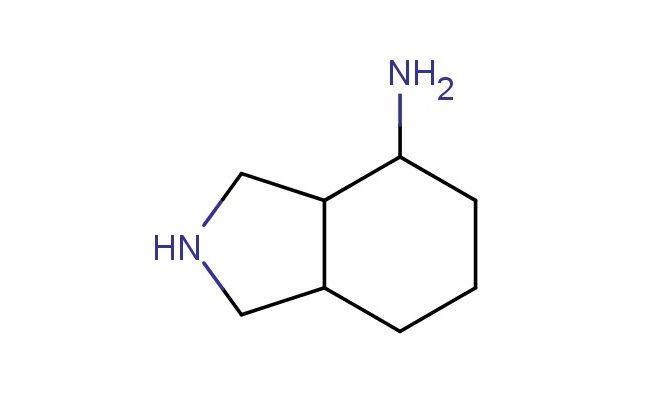


Octahydro-1H-isoindol-4-amine
$325.00
CAS No.: 477700-49-5
Catalog No.: 192611
Purity: 95%
MF: C8H16N2
MW: 140.23
Storage: 2-8 degree Celsius
SMILES: C1NCC2C(CCCC12)N
Catalog No.: 192611
Purity: 95%
MF: C8H16N2
MW: 140.23
Storage: 2-8 degree Celsius
SMILES: C1NCC2C(CCCC12)N
For R&D use only. Not for human or veterinary use.
Octahydro-1H-isoindol-4-amine; CAS No.: 477700-49-5; Octahydro-1H-isoindol-4-amine. PROPERTIES: Octahydro-1H-isoindol-4-amine is a colorless to pale yellow liquid with a molecular weight of 149.22 g/mol. It has a density of approximately 1.05 g/cm? and a boiling point around 160-165 C at 760 mmHg. This compound exhibits moderate solubility in organic solvents like ethanol and limited water solubility. It is sensitive to oxidation and should be stored under an inert atmosphere in a tightly sealed container at temperatures below 20 C. Safety precautions include wearing chemical-resistant gloves and eye protection during handling. In case of skin contact, washing with soap and water is recommended. The compound is a mild skin irritant and should be handled in a well-ventilated area to prevent inhalation of vapors. APPLICATIONS: Octahydro-1H-isoindol-4-amine is primarily used in pharmaceutical synthesis as a chiral intermediate for creating selective serotonin reuptake inhibitors. The octahydroisoindole ring system provides a unique scaffold for interacting with serotonin transporters, as described in psychopharmacology literature. Additionally, it serves as a building block for creating beta-blockers where the chiral center influences receptor subtype selectivity, as reported in cardiovascular medication research. In agrochemical applications, it is utilized as a precursor for creating herbicides that modulate plant hormone signaling pathways, where the octahydroisoindole structure mimics natural plant growth regulators, as detailed in agricultural chemistry publications. The compound also finds application in materials science for creating chiral liquid crystals, where the amine functionality induces specific mesophase formations, as outlined in liquid crystal technology studies. Furthermore, it is employed in bioconjugation chemistry as a linker molecule between targeting ligands and therapeutic agents, where the amine group allows for enzymatic cleavage to release bioactive compounds, as described in bioanalytical chemistry literature. Its chiral nature makes it valuable in asymmetric synthesis as a resolving agent for racemic mixtures, as detailed in stereochemistry research.
Reviews
Write Your Own Review