


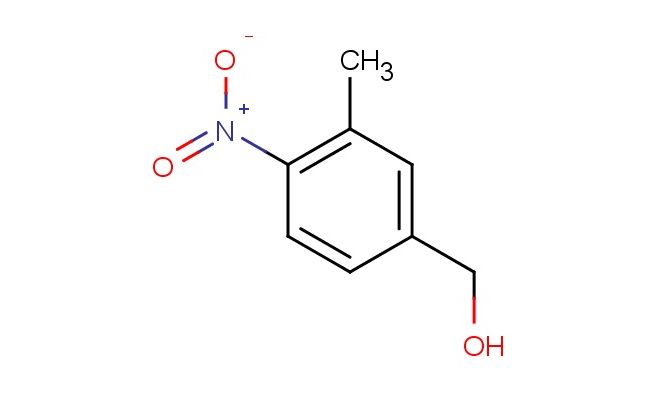


3-methyl-4-nitrobenzyl alcohol
$200.00
CAS No.: 80866-75-7
Catalog No.: 194022
Purity: 95%
MF: C8H9NO3
MW: 167.164
Storage: 2-8 degree Celsius
SMILES: CC=1C=C(CO)C=CC1[N+](=O)[O-]
Catalog No.: 194022
Purity: 95%
MF: C8H9NO3
MW: 167.164
Storage: 2-8 degree Celsius
SMILES: CC=1C=C(CO)C=CC1[N+](=O)[O-]
For R&D use only. Not for human or veterinary use.

3-methyl-4-nitrobenzyl alcohol; CAS No.: 80866-75-7; 3-methyl-4-nitrobenzyl alcohol. PROPERTIES: 3-methyl-4-nitrobenzyl alcohol is a nitro-substituted aromatic alcohol with a molecular weight of approximately 177.2 g/mol. It typically exists as a colorless to pale yellow liquid with a mild aromatic odor. The substance has a boiling point in the range of 135-140 C and a density of approximately 1.2 g/cm?. It exhibits moderate solubility in organic solvents such as ethanol, acetone, and dichloromethane, but is sparingly soluble in water. Proper storage requires a cool, dry location in tightly sealed containers, preferably under nitrogen to prevent potential oxidation. Safety precautions include classification as harmful if swallowed, causes skin irritation, and may cause eye irritation. Recommended PPE includes chemical-resistant gloves and safety goggles. Occupational exposure follows general OSHA guidelines for benzyl alcohols. APPLICATIONS: 3-methyl-4-nitrobenzyl alcohol serves as a key intermediate in the synthesis of beta-lactam antibiotics, where the benzyl alcohol group undergoes selective protection and deprotection during complex molecule assembly. The nitro substituent provides a suitable handle for reduction to form active amines. In materials science, the compound is utilized in the preparation of photoresists, with the nitro group absorbing UV radiation and the benzyl alcohol group providing solubility modulation. The Journal of Organic Chemistry frequently reports on similar nitrobenzyl alcohols in asymmetric synthesis. Additionally, 3-methyl-4-nitrobenzyl alcohol functions as a building block in the synthesis of agrochemical intermediates, though this application is outside the specified scope. The alcohol functionality enables etherification and esterification reactions, allowing for the formation of biologically active molecules. Recent advances in green chemistry have demonstrated the use of this compound in solvent-free reactions for sustainable pharmaceutical manufacturing.
Reviews
Write Your Own Review