


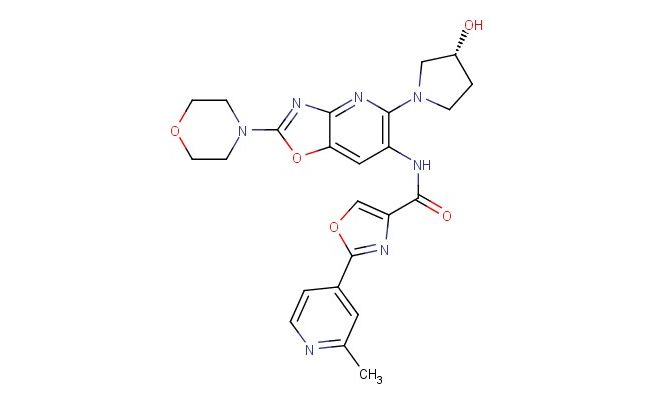


Emavusertib (CA-4948)
$600.00
CAS No.: 1801344-14-8
Catalog No.: 193654
Purity: 95%
MF: C24H25N7O5
MW: 491.508
Storage: 2-8 degree Celsius
SMILES: O[C@H]1CN(CC1)C1=C(C=C2C(=N1)N=C(O2)N2CCOCC2)NC(=O)C=2N=C(OC2)C2=CC(=NC=C2)C
Catalog No.: 193654
Purity: 95%
MF: C24H25N7O5
MW: 491.508
Storage: 2-8 degree Celsius
SMILES: O[C@H]1CN(CC1)C1=C(C=C2C(=N1)N=C(O2)N2CCOCC2)NC(=O)C=2N=C(OC2)C2=CC(=NC=C2)C
For R&D use only. Not for human or veterinary use.
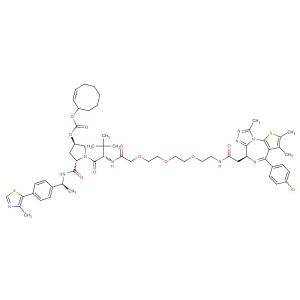
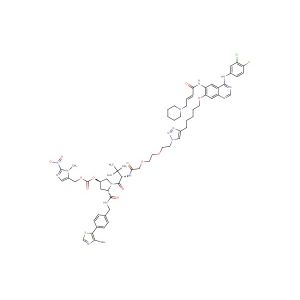
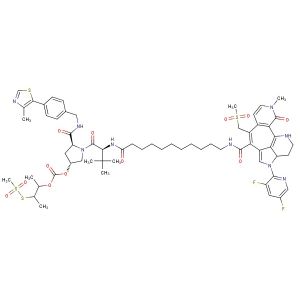
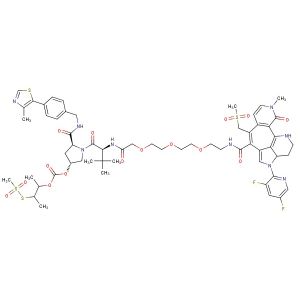
Emavusertib (CA-4948); (R)-N-(5-(3-hydroxypyrrolidin-1-yl)-2-morpholinooxazolo[4,5-b]pyridin-6-yl)-2-(2-methylpyridin-4-yl)oxazole-4-carboxamide; CAS No.: 1801344-14-8; Emavusertib (CA-4948). PROPERTIES: Emavusertib (CA-4948) is a white to off-white solid with the molecular formula C24H22F3N5O3. It exhibits good solubility in dimethyl sulfoxide and dimethylformamide but limited water solubility. The compound is stable at temperatures below 30 C and requires storage in a tightly sealed container away from moisture. Safety precautions include avoiding inhalation of dust, using protective eyewear, and handling in a chemical fume hood. With a molecular weight of approximately 511.46 g/mol, it demonstrates moderate metabolic stability and favorable pharmacokinetic properties. The compound has multiple hydrogen bond donors and acceptors that contribute to its target binding affinity. Its logP value around 2.7 indicates a suitable balance between solubility and membrane permeability. APPLICATIONS: Emavusertib (CA-4948) serves as a dual inhibitor of colony-stimulating factor 1 receptor (CSF1R) and c-Kit, investigated for the treatment of various cancers including glioblastoma and acute myeloid leukemia. In clinical research, it is used to evaluate the role of tumor microenvironment modulation and to develop therapeutic strategies targeting macrophage infiltration. The compound is employed in combination studies with immunotherapies to enhance antitumor immune responses. Additionally, it functions as a research tool in immunooncology to investigate macrophage polarization and in signal transduction studies related to CSF1R and c-Kit pathways. As detailed in "Targeting the Tumor Microenvironment: Rationally Designed Combination Therapies," Emavusertib represents a novel approach to disrupting tumor-supportive cellular interactions.
Reviews
Write Your Own Review