The store will not work correctly when cookies are disabled.
We use cookies for optimal website function and to better serve our customers. By continuing to browse you agree to the storing of cookies on your device. See our privacy policy for details.
Allow cookies Deny
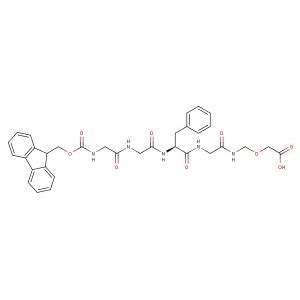
CAS No.: 1599440-13-7; Deruxtecan. PROPERTIES: Deruxtecan is an antibody-drug conjugate (ADC) comprising a humanized anti-TROP2 antibody linked to a topoisomerase I inhibitor payload via a cleavable glycine linker. This advanced therapeutic agent typically appears as a sterile, preservative-free, colorless to pale yellow solution with a pH around 5.5-6.5. Its complex molecular structure includes a molecular weight of approximately 150 kDa for the antibody component and a small molecule payload with a molecular weight of about 333.1 g/mol (C16H13N3O6S). Deruxtecan must be stored at 2 C to 8 C in its original container to maintain stability, avoiding freezing and exposure to light. Special handling precautions include using appropriate biological safety cabinets during preparation, wearing protective garments, and implementing measures to prevent exposure to the cytotoxic payload. The compound is classified as hazardous, requiring strict adherence to handling and disposal guidelines. APPLICATIONS: Deruxtecan is primarily indicated for the treatment of metastatic triple-negative breast cancer and previously treated metastatic non-small cell lung cancer as outlined in oncology treatment guidelines. In clinical research settings, it serves as a model ADC for studying the efficacy of TROP2-targeted therapy in various solid tumors as reported in clinical trial publications. The compound's mechanism of action, involving intracellular release of the topoisomerase inhibitor payload after antibody-mediated internalization, has been extensively studied to understand ADC pharmacodynamics as documented in specialized pharmaceutical literature. Additionally, Deruxtecan is utilized in biomarker research to identify predictive factors for patient response, contributing to personalized medicine approaches in oncology as described in translational research studies.