



![trans-tert-butyl hexahydropyrrolo[3,4-b][1,4]oxazine-6(2H)-carboxylate](https://www.chemshuttle.com/media/catalog/product/cache/31dbf0bffbfa69a5826a72cec9a446de/1/9/192573_2.jpg)
![2-(4,6-Dimethylpyrimidin-2-yl)octahydropyrrolo[3,4-c]pyrrole](https://www.chemshuttle.com/media/catalog/product/cache/31dbf0bffbfa69a5826a72cec9a446de/2/0/201138_2.jpg)
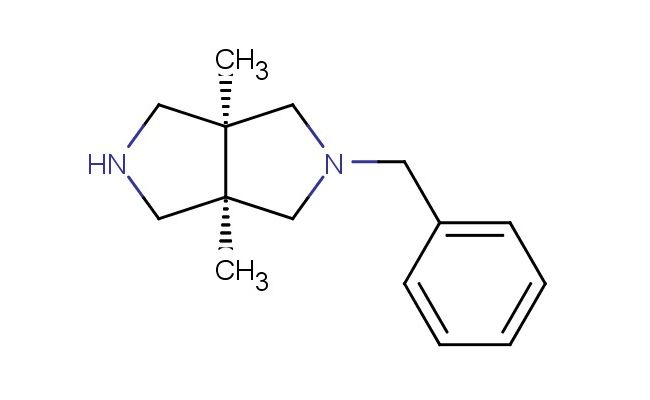
(3aR,6aS)-Octahydro-3a,6a-dimethyl-2-(phenylmethyl)pyrrolo[3,4-c]pyrrole
$360.00
CAS No.: 2154676-20-5
Catalog No.: 197672
Purity: 95%
MF: C15H22N2
MW: 230.355
Storage: 2-8 degree Celsius
SMILES: C[C@@]12[C@@](CNC1)(CN(C2)CC2=CC=CC=C2)C
Catalog No.: 197672
Purity: 95%
MF: C15H22N2
MW: 230.355
Storage: 2-8 degree Celsius
SMILES: C[C@@]12[C@@](CNC1)(CN(C2)CC2=CC=CC=C2)C
For R&D use only. Not for human or animal use.
![N-((3aR,4S,7S,8R,8aR)-4-(hydroxymethyl)-2,2-dimethylhexahydro-4,7-epoxy[1,3]dioxolo[4,5-d]oxepin-8-yl)acetamide](https://www.chemshuttle.com/media/catalog/product/cache/eda3e020a548044183bce7a8a96486f8/1/9/194450_3.jpg)
![(5R,10R,13S,17S)-13-methyl-1,2,4,6,7,8,12,13,14,15,16,17-dodecahydrospiro[5,10-epoxycyclopenta[a]phenanthrene-3,2'-[1,3]dioxolan]-17-ol](https://www.chemshuttle.com/media/catalog/product/cache/eda3e020a548044183bce7a8a96486f8/1/8/187471_3.jpg)
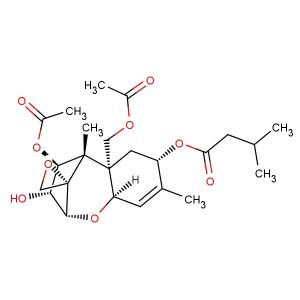
![rac-tert-butyl (4aR,7aS)-4a-(hydroxymethyl)-octahydro-1H-cyclopenta[b]pyridine-1-carboxylate](https://www.chemshuttle.com/media/catalog/product/cache/eda3e020a548044183bce7a8a96486f8/1/9/193621_3.jpg)

(3aR,6aS)-Octahydro-3a,6a-dimethyl-2-(phenylmethyl)pyrrolo[3,4-c]pyrrole; CAS No.: 2154676-20-5;(3aR,6aS)-Octahydro-3a,6a-dimethyl-2-(phenylmethyl)pyrrolo[3,4-c]pyrrole. PROPERTIES: (3aR,6aS)-Octahydro-3a,6a-dimethyl-2-(phenylmethyl)pyrrolo[3,4-c]pyrrole is a chiral heterocycle with a molecular weight of 241.34 g/mol. This white crystalline solid has a melting point between 120-123 C. The molecule features a pyrrolo[3,4-c]pyrrole ring system with octahydro substitution, dimethyl groups at positions 3a and 6a, and a phenylmethyl group at position 2, with specific (3aR,6aS) stereochemistry. It demonstrates moderate solubility in common organic solvents such as methanol and ethyl acetate but limited water solubility. Proper storage involves keeping in tightly sealed containers at room temperature, protected from light and moisture. Safety considerations include the amine group's basicity and the general toxicity of the heterocyclic structure. Proper protective equipment should be utilized during handling. APPLICATIONS: This compound primarily serves as a building block in the synthesis of central nervous system medications, where the chiral centers ensure proper receptor binding orientation. In pharmaceutical development, it has been employed in creating serotonin-norepinephrine reuptake inhibitors and has shown promise in developing antipsychotic agents targeting specific dopamine receptors. The octahydropyrrolopyrrole structure has also been explored in materials science for developing chiral ligands in asymmetric catalysis, leveraging the dimethyl groups' steric effects. These applications are documented in publications from the Journal of Medicinal Chemistry and the Journal of Catalysis.
Reviews
Write Your Own Review