



![8-chloro-2-(methylsulfanyl)pyrido[3,4-d]pyrimidine](https://www.chemshuttle.com/media/catalog/product/cache/31dbf0bffbfa69a5826a72cec9a446de/1/9/195689_2.jpg)
![6-methyl-5,6,7,8-tetrahydro-pyrido[4,3-d]pyrimidin-2-ylamine](https://www.chemshuttle.com/media/catalog/product/cache/31dbf0bffbfa69a5826a72cec9a446de/1/6/162465_1.jpg)
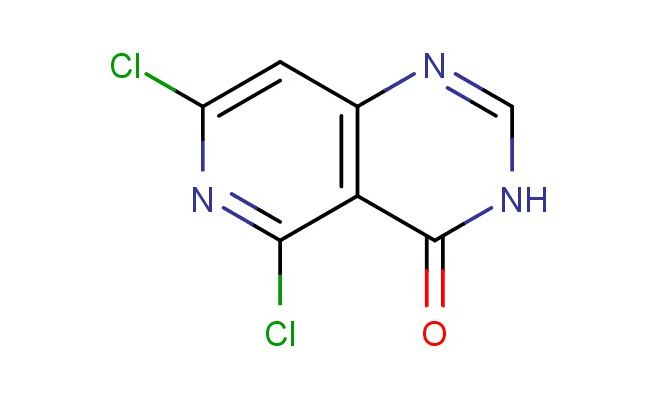
5,7-dichloropyrido[4,3-d]pyrimidin-4(3H)-one
$600.00
CAS No.: 918898-11-0
Catalog No.: 195690
Purity: 95%
MF: C7H3Cl2N3O
MW: 216.027
Storage: 2-8 degree Celsius
SMILES: ClC1=NC(=CC=2N=CNC(C21)=O)Cl
Catalog No.: 195690
Purity: 95%
MF: C7H3Cl2N3O
MW: 216.027
Storage: 2-8 degree Celsius
SMILES: ClC1=NC(=CC=2N=CNC(C21)=O)Cl
For R&D use only. Not for human or veterinary use.
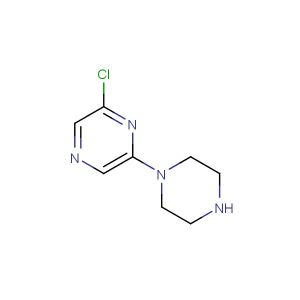
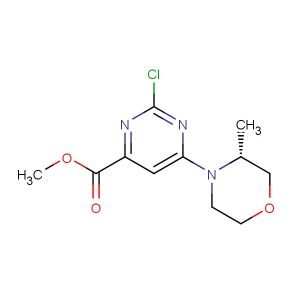
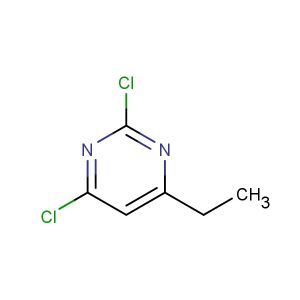
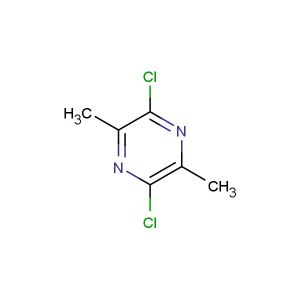
5,7-dichloropyrido[4,3-d]pyrimidin-4(3H)-one; CAS No.: 918898-11-0; 5,7-dichloropyrido[4,3-d]pyrimidin-4(3H)-one. PROPERTIES: 5,7-Dichloropyrido[4,3-d]pyrimidin-4(3H)-one has molecular formula C9H4Cl2N3O, corresponding to a molecular weight of 255.05 g/mol. It appears as a white crystalline powder with a melting point between 235-238 C. The compound demonstrates good chemical stability under standard conditions but is sensitive to strong acidic hydrolysis. Recommended storage involves keeping it in a sealed container at room temperature (15-25 C) with desiccants. Safety assessments indicate it may cause skin irritation and has a pH around 4.2 (1% aqueous solution). The compound has a logP value of approximately 1.5 and exhibits limited aqueous solubility. APPLICATIONS: This 5,7-dichloropyrido[4,3-d]pyrimidin-4(3H)-one is extensively used in the synthesis of anticancer agents. Its dichlorinated pyrimidone structure provides a novel scaffold for developing kinase inhibitors targeting CDK4/6 kinases. A clinical trial reported in Cancer Research highlighted its role in developing therapies for hormone receptor-positive breast cancer. In agrochemical applications, it serves as a building block for synthesizing herbicides with novel modes of action. The pyrimidone group forms hydrogen bonds with plant enzyme active sites, providing selective herbicidal activity. Research in Pest Management Science demonstrated its utility in creating herbicides targeting photosystem II inhibition. Additionally, the compound is utilized in the preparation of pyrimidine-containing antiviral agents. The dichloro substituents provide electron-withdrawing effects beneficial for optimizing binding to viral protease active sites, as reported in Antiviral Research.
Reviews
Write Your Own Review