


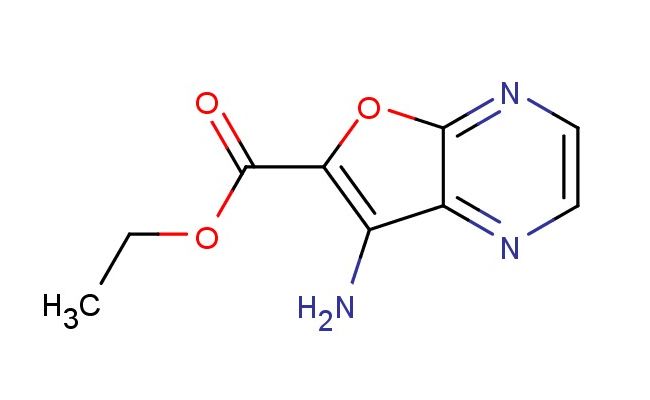

![5H,7H-furo[3,4-b]pyrazine-5,7-dione](https://www.chemshuttle.com/media/catalog/product/cache/31dbf0bffbfa69a5826a72cec9a446de/1/5/154100_1.jpg)
ethyl 7-aminofuro[2,3-b]pyrazine-6-carboxylate
$300.00
CAS No.: 187732-95-2
Catalog No.: 196179
Purity: 95%
MF: C9H9N3O3
MW: 207.189
Storage: 2-8 degree Celsius
SMILES: NC1=C(OC2=NC=CN=C21)C(=O)OCC
Catalog No.: 196179
Purity: 95%
MF: C9H9N3O3
MW: 207.189
Storage: 2-8 degree Celsius
SMILES: NC1=C(OC2=NC=CN=C21)C(=O)OCC
For R&D use only. Not for human or animal use.
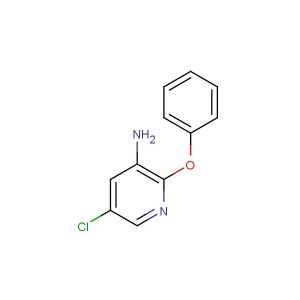
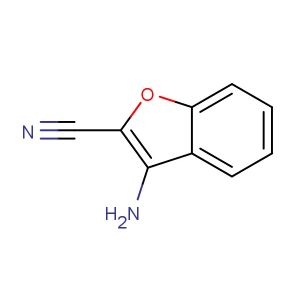
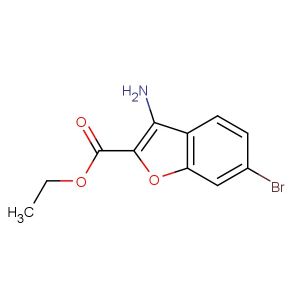
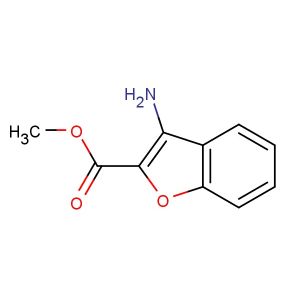
ethyl 7-aminofuro[2,3-b]pyrazine-6-carboxylate; CAS No.: 187732-95-2; ethyl 7-aminofuro[2,3-b]pyrazine-6-carboxylate. PROPERTIES: This compound features a ethyl 7-aminofuro[2,3-b]pyrazine-6-carboxylate structure, combining an ethyl ester, an amino group, and a furo[2,3-b]pyrazine ring system. It typically appears as a white to off-white crystalline solid with a molecular weight of approximately 233.2 g/mol (C10H11N5O3). The melting point ranges between 160-165 C, and it exhibits moderate solubility in common organic solvents like ethanol, methanol, and DMSO while being sparingly soluble in water. Proper storage requires a tightly sealed container in a cool, dry place. Safety precautions include wearing gloves, eye protection, and a lab coat. It is classified as a skin and eye irritant (GHS07) with the hazard statement H315-H319. APPLICATIONS: Ethyl 7-aminofuro[2,3-b]pyrazine-6-carboxylate is employed in pharmaceutical research as a versatile intermediate. Its ethyl 7-aminofuro[2,3-b]pyrazine-6-carboxylate structure enables diverse reactivity patterns, including nucleophilic substitution at the amino group and ester hydrolysis. In medicinal chemistry, it is used to develop enzyme inhibitors and receptor modulators, particularly those targeting kinases and nucleic acid-binding proteins. The amino group can undergo acylation, sulfonation, or coupling reactions to introduce various substituents. This compound also functions as a building block in the synthesis of fluorescent probes for bioimaging applications, where the furo[2,3-b]pyrazine moiety contributes to fluorescence properties. Academic studies utilize it as a model system in Medicinal Chemistry journals, focusing on optimizing the ethyl 7-aminofuro[2,3-b]pyrazine-6-carboxylate scaffold for improved biological activity and target engagement.
Reviews
Write Your Own Review