


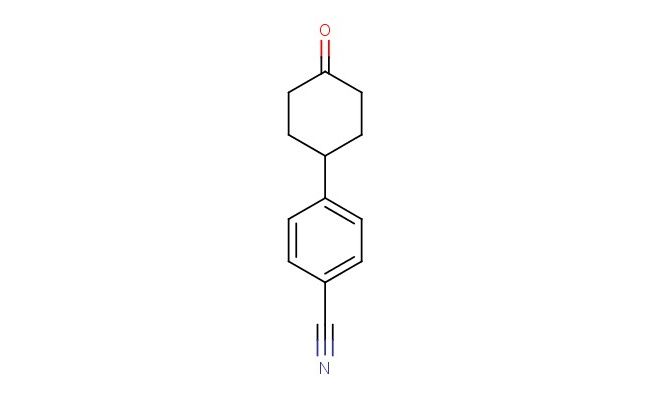


4-(4-oxocyclohexyl)benzonitrile
$400.00
CAS No.: 73204-07-6
Catalog No.: 196534
Purity: 95%
MF: C13H13NO
MW: 199.253
Storage: 2-8 degree Celsius
SMILES: O=C1CCC(CC1)C1=CC=C(C#N)C=C1
Catalog No.: 196534
Purity: 95%
MF: C13H13NO
MW: 199.253
Storage: 2-8 degree Celsius
SMILES: O=C1CCC(CC1)C1=CC=C(C#N)C=C1
For R&D use only. Not for human or veterinary use.
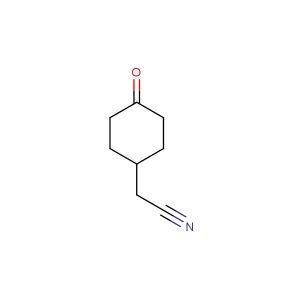
4-(4-oxocyclohexyl)benzonitrile; CAS No.: 73204-07-6; 4-(4-oxocyclohexyl)benzonitrile. PROPERTIES: 4-(4-oxocyclohexyl)benzonitrile is a white crystalline solid with a molecular formula of C13H11NO. It has a molecular weight of 201.23 g/mol and a melting point of approximately 125-128 C. The compound exhibits moderate solubility in water and is more soluble in polar aprotic solvents like DMSO and DMF. It is sensitive to acidic conditions and should be stored in a cool, dry place at temperatures below 25 C in a tightly sealed container. Safety precautions include avoiding inhalation of dust and using gloves. It is classified as a category 3 eye irritant under GHS classification. APPLICATIONS: 4-(4-oxocyclohexyl)benzonitrile serves as a key intermediate in the synthesis of various nonsteroidal anti-inflammatory drugs (NSAIDs), particularly those targeting cyclooxygenase-2 (COX-2) selectivity. Its nitrile group provides essential electron-withdrawing effects for enzyme inhibition. In the field of materials science, this compound is used in the preparation of polymeric materials with enhanced thermal stability, as documented in Polymer Chemistry. It also functions as a building block for the synthesis of fluorescent probes for detecting biological thiols, where its carboxylic acid (after hydrolysis) group facilitates conjugation to biomolecules. Additionally, the compound is employed in the development of novel liquid crystalline materials for display technologies, where its ability to form ordered structures contributes to improved electro-optical properties. Its unique structural features make it valuable in the synthesis of bioactive molecules targeting microtubule-associated proteins, as reported in the Journal of Medicinal Chemistry, where its cyclohexanone group interacts with tubulin.
Reviews
Write Your Own Review