


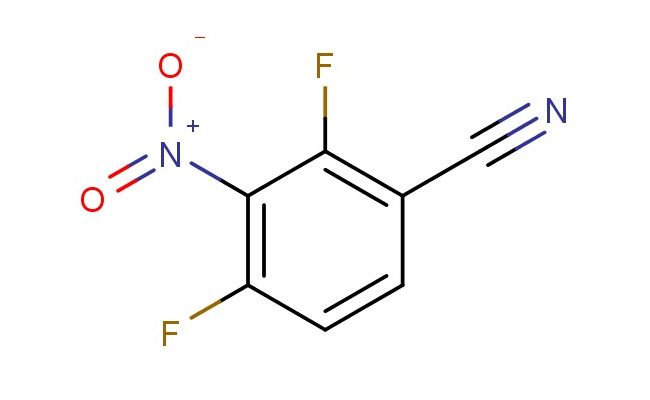


2,4-difluoro-3-nitrobenzonitrile
$200.00
CAS No.: 1186194-75-1
Catalog No.: WLZ1598
Purity: 95%
MF: C7H2F2N2O2
MW: 184.101
Storage: 2-8 degree Celsius
SMILES: FC1=C(C#N)C=CC(=C1[N+](=O)[O-])F
Catalog No.: WLZ1598
Purity: 95%
MF: C7H2F2N2O2
MW: 184.101
Storage: 2-8 degree Celsius
SMILES: FC1=C(C#N)C=CC(=C1[N+](=O)[O-])F
For R&D use only. Not for human or veterinary use.

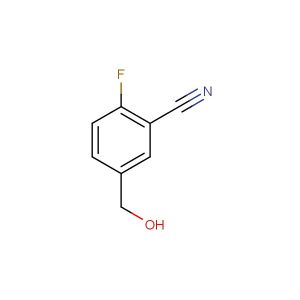
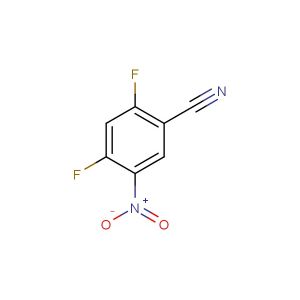
CAS NO.: 1186194-75-1; 2,4-difluoro-3-nitrobenzonitrile. PROPERTIES: This fluorinated aromatic compound features two fluorine atoms and a nitro group on a benzene ring connected to a nitrile group, creating a molecule with potential applications in organic synthesis and pharmaceutical research. The 2,4-difluoro-3-nitrobenzonitrile typically appears as a white to off-white crystalline solid with moderate solubility in common organic solvents. Its molecular structure includes electron-withdrawing fluorine atoms and a nitro group that influence the electronic properties of the aromatic system. For optimal stability and to prevent degradation, this compound should be stored at 2-8 degree Celsius in a tightly sealed container under anhydrous conditions. When handling, appropriate safety measures including nitrile gloves and safety goggles are essential. This compound is sensitive to moisture and may hydrolyze in aqueous environments. In case of accidental spillage, clean the area with a damp cloth and dispose of materials according to local regulations. APPLICATIONS: The 2,4-difluoro-3-nitrobenzonitrile serves as a valuable intermediate in the synthesis of fluorinated compounds and materials with specific electronic properties. The fluorine substituents provide handles for further functionalization through nucleophilic substitution reactions. In medicinal chemistry, this compound functions as a building block for developing pharmaceuticals targeting enzyme inhibitors and receptor modulators. The nitro group can be further reduced to amine functionality for additional diversification. Additionally, the molecule finds utility in materials science as a monomer for creating polymers with specific electronic and optical properties. Researchers utilizing this compound benefit from its defined halogenation pattern and functional group arrangement, enabling the development of advanced materials with tailored electronic characteristics.
Reviews
Write Your Own Review